Archive for the ‘Gear Q & A’ Category

Know Your Knots

April 12, 2013

For most guided climbs you don’t need to know how to tie any knots, but as you progress as a climber this will change. Plus, if you enjoy climbing you’re probably a bit of a geek about this stuff like we are.

Animated Knots By Grog provides some great step by step instructions for a lot of the classic climbing knots.

Grab a 6 foot section of rope and get started with some of the more common knots used in the mountains like the Figure 8 (follow-through and on a bight), the butterfly, the clove hitch, the prussik, the double fisherman’s, the overhand, etc.

Have fun!


From A Guide’s Perspective – International Travel Tips

April 2, 2013

By Jenni Fogle

Jenni Fogle

Last year I spent 57 days at “home,” making me wonder where my home really is. I’m in Africa as I write this and will be in Myanmar later this month (Note: Jenni is in Nepal right now). A client on Kilimanjaro recently said to me, “Usually I think this sounds too cliche, but you truly are a citizen of the world.” I take it as a compliment. Home is where I hang my backpack. I can’t donate blood, because I have spent so much time in Europe that I am considered high-risk for mad cow disease. This is despite the fact that I haven’t eaten any red meat since I was 12 years old.

What I’m trying to say is that I suppose I am qualified to give the following tips about international travel and hope that at least one of these tips will make your next trip more enjoyable. I’m going to assume that you all know basic TSA requirements. Put your multi-tool in your checked bag and dump out your water bottle.

Tip # 1 – Pack what you need and leave what you don’t. Research the weather conditions for your destination and bring appropriate clothing. If you’re going somewhere you’ve never been, talk to someone who’s been there. Many items can be found worldwide, but how much time do you want to spend shopping at your destination? I went on a climbing trip to Ecuador in the fall. My climbing partner and I had a tight schedule planned and brought enough food to get us through the first climb so that we could head straight for the mountain less than 8 hours after our arrival.  We resupplied for the second climb on the rest day.

Tip #2 – Find out what type of adapter plug you will need at your destination. Small, universal battery packs can be convenient so can solar chargers if you will have enough sun and time to recharge with the sun.

Tip # 3 – Select your seat on long flights. I can’t stand being trapped in a middle or window seat on long flights, and I’m only 5’6″. You usually don’t have anyone to blame but yourself if you’re trapped between two people you would normally never sit next to. If you prefer a window or an aisle, you can usually select your seat easily on line. If that’s not possible, a phone call to the airline should do the trick. There are rare occasions when seats cannot be preselected, but even then you can express your preference when you check in.

Tip # 4 – Flexibility key. Water, electricity and Wi-Fi are much more reliable in the United States than most places in the world. I hope you don’t lose all three at once, but don’t freak out if you do. Try to remember way back when we only had landlines, even for the Internet. Relax and appreciate where you are rather than being caught up in staying in constant contact with home.

Tip # 5 – Before you leave home be sure to jot down important local names, addresses, email addresses, websites, phone numbers, etc.  These can prove invaluable.

Tip # 6 – Just like on the trail – communicate your plans (be specific) to a family member or close friend who is not going on the trip with you… then be sure keep them updated to any changes to your itinerary.

The list goes on forever, but hopefully these few tips come in handy on your next adventure.

Bon Voyage!

-Jenni

PS – Oh, and don’t lose your passport!

From A Guide’s Perspective – Packing Tips

March 27, 2013

By Chris Meder

Chris Meder

Packing is one of those unsung skills of all successful climbers. Do it well and you will save time, energy, hassle… and be ready to go before everyone else.  Here are a few things to help you improve your packing game.

1. Pack only what you need, leave the rest behind.

Less gear means a lighter pack, which makes it far easier and more enjoyable to climb.  We all know this intuitively, but it’s easy to lose sight of when thinking about creature comforts.   Pare down your gear to only what is on the gear list, and you’ll be well on your way to a better climb.  Most climbs are relatively short in the grand scheme of things, so it’s easy to go without some of those supposed “necessities” for three or four days.  You will thank yourself every time you pick up your pack.

2. Be balanced and compact.

An ideal packing job should give you a compact and balanced pack that won’t be cumbersome while climbing.  Here are some guidelines to help you get there:

  • Heavy, dense items such as food, water and climbing gear should be centered in the pack, and go up against your back and generally from the small of your back up to your shoulders
  • Lighter, less-dense items such as clothing should surround the heavy items, further from your back and on the bottom
  • Use stuff-able items such as clothing to fill in around rigid items, such as food or climbing gear, filling all the empty spaces
  • Fit everything possible inside the pack (crampons and ice axe are the usual exceptions).  Attaching things to the outside of the pack can throw you off balance easily.

3. Big things in the big pocket, small things in the small pocket.

If you’re buying new, choose a simple pack with one large compartment, and a small pocket better known as the lid of the pack on top.  That’s really all you need.  This might sound limiting, especially when considering all the bells and whistles on most packs on the market these days.  But, the more pockets available, the more places to lose things.  Keep the pack simple; this helps keep the job of packing it simple.

4. Do a trial run.

Lay out your gear, clothing and food for the climb on the living room floor.  Now divide the gear into two piles:

  • Big items – think jackets, clothing, sleeping bag, sleeping pad, water bottles…
  • Small items – sunglasses, hat, knife, sunscreen, camera, GPS, toothbrush

Now pack the pack from the two piles; big things go in the big pocket, small things go in the small pocket.  Simple enough, right?  Think about it – if I put my camera or sunscreen in the middle of the big compartment amongst a bunch of clothes and other bulky items, I’ll never find it when I need it.  And thinking about an item being buried makes me less likely to actually look for it.  Translation – sunburn and no photos.

5. Same item, same place, every time.

“Where are those batteries?” “I know I packed that shirt somewhere.”  We hear things like this a lot, and it’s just due to a lack of routine.  So here’s how to avoid this.  Pack and unpack your gear a bunch of times before a trip.  Develop a system that works for you so that everything fits, and you know where everything is located.  Do this enough so that you put each item in the same general place every time.  This helps a lot when you’re looking for something or scrambling to pack quickly in the mountains.  Everything has its place, and you’ll always know where each item lives.  Then you’ll have time for a drink or a photo while someone else is looking for their batteries.

So there it is.  Only pack what you need, in a simple pack, in a balanced and well organized manner and you’ll be well ahead of those who haven’t yet mastered the packing game.

Into A Crevasse…On Purpose

September 28, 2012

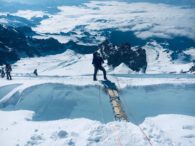
Last week we put together an Intro To Mountaineering Course for a few Outdoor Research product managers and designers. They spent day 1 leaning the basics (ice axe arrest, cramponing, etc.). The second day they went out onto the Nisqually Glacier for an up close encounter with a crevasse.

Below is a note and a couple photos Kendra sent our way – sounds like they had a good time!

Tye Chapman

From: Kendra
Sent: Friday, September 28, 2012 9:51 AM
To: Tye Chapman
Subject: Thank You

We would like to give a huge THANK YOU to IMG Guides Emily Johnston and Austin Shannon for an amazing experience on our Intro To Mountaineering Course.  It was an experience none of us will ever forget.  Emily was an exceptional instructor teaching us self arrest with our ice axes and how to “walk like a monkey down a hill” with our crampons.    We had such a great time with many laughs throughout both days.

The second day, when Austin joined us, was sweet!  Having the opportunity to repel down a crevasse and ice climb out was absolutely awesome.  Never having ice climbed before I have to admit that I was absolutely terrified, however both Emily and Austin were very comforting and professional easing each of us into the situation.  It was so amazing I had to go down into the crevassse a second time.  This was such a great opportunity for our product team to get out  and use our product on a glacier with professional mountain guides to gain valuable feedback.

Seriously, this was such an incredible two days and we are so grateful for the IMG team to allow us such an amazing opportunity.  Next year….we summit!

Thank you for everything and we hope you continue to love and use the Outdoor Research product.

Thanks,

Kendra Brandenburg
Outdoor Research
Product Manager – Headwear

FAQ #37: What Boots Are Sufficient For Rainier?

June 7, 2012

What boots will you wear?

Every year “the boot question” comes up and every year we break the hearts of people who haven’t read the boot FAQ section when they show up here in May/June to climb Mt. Rainier in their shiny, brand new, ‘single boots’ and we tell them they can’t wear them. So, in the spirit of the new Rainier season and the low freezing levels this week we’ll revisit the most frequently asked question:

Here is IMG’s thinking:

For a first time climb of Mt. Rainier, you want to be as well prepared as possible. That means warm, waterproof boots. Double plastic boots provide the best possible warmth for your feet, they are completely waterproof, and they don’t constrict your toes or ankles when worn with crampons attached. First time climbers will do well to choose double plastic boots, and IMG makes this simple by offering them for rent. We also strongly recommend double plastic boots in early summer (May and June) for all participants and we REQUIRE them on winter programs.

There are some very warm, insulated, waterproof synthetic or leather single climbing boots on the market these days. If you own a pair of single climbing boots (generally less than ten years old) and have used them successfully in cold weather environments previously, then single boots will probably work for you on Mt. Rainier.

There are a number of manufacturers who make very good climbing boots these days.

Here are some of the requirements your boots must possess:

  • Must be fully rigid or ¾ rigid shank soled.
  • Must be factory treated waterproof leather or synthetic waterproof
  • Must have synthetic insulation
  • Must be crampon compatible

Read More…

Ibuprofen Vs. AMS – Time Will Tell

April 3, 2012

Stanford University recently published a study about ibuprofen and its possible prevention of acute mountain sickness (AMS).  We asked our resident ER Doc/guide, Dr. Emily Johnston, to weigh in.  Below is her summation of the article.

—————-

Summit of Everest - May 2008. (Photo by Dean Smith)

If you’re planning a trip to altitude in the near future, you may have heard about a recently published study from Stanford University that took a look at ibuprofen as a medication to prevent acute mountain sickness.  While this is potentially exciting news, and it does make sense physiologically, there are a few caveats:

1) The ‘n’ (number of subjects) in this study was relatively small, with 86 participants.  Larger studies, in the future, may help confirm the effectiveness of ibuprofen for prevention of acute mountain sickness (AMS).

2) While ibuprofen is a commonly used medication, available without a prescription, it can still have significant side effects including kidney failure (worse with dehydration), bleeding of the gastrointestinal tract, and platelet and white blood cell dysfunction, which may alter your body’s ability to stop bleeding or ward off infection, amongst other things.

3) Sometimes we see an “if some is good, then more is better”
mentality with nonprescription medications. Remember to always follow the dosage guidelines provided with the over-the-counter medications that you buy, and read and heed the warnings.

It would be great if such a commonly used, generally safe and accessible medication is truly effective against AMS.  This study is very encouraging, stay tuned for more information.  And remember, people have been climbing mountains without medications for hundreds of years.  While meds are great to have, when needed, they’re not a magic bullet for getting to the top.  Nothing replaces careful physical and mental preparation.  So keep on hitting the trail, or the gym, and get ready to enjoy your climb.

No one ever failed to summit because they were too strong!

Dr. Emily Johnston

From A Guide’s Perspective: Staying In Shape

January 25, 2012

Staying In Shape In The Off Season
By Jess Culver

Lets face it, it’s hard to stay in shape between seasons. It starts when the Halloween candy comes out, gets even worse come Thanksgiving, and hits its peak somewhere between Christmas and New Years. Then, the 1st of the years rolls around and you’re a few pounds guiltier & several pounds heavier. Finding the motivation to shed this weight can be tough; here are some tips I use between seasons.

For me, I know I have to be in good shape when the Rainier season opens, which is probably in the back of a lot of your minds as well. With that in mind, I’ve found that setting smaller goals between big goals really makes the time go by a lot quicker than the alternative: 4-5 days a week on the hamster wheel. I like to sign up for a few running races in the winter & spring.  I’ll start small, maybe a 5k, then work up to a 10k and eventually a half-marathon and then the full 26.2. There are countless programs out there that will set you up for success at these races; they work if you’re honest with yourself and stick to the program.  And don’t be intimidated by the people that run these races, they are all smiles and are super supportive to all shapes, sizes and speeds. Trust me, you’ll have a blast.

This year I completed some of my biggest races yet. I ran a local 30K trail run here in Montana. I drove over to Spokane, WA for my first ever marathon and finished in under 4 hours (goal achieved).  And knocked out another marathon a couple weeks ago in Arizona.

Remember: things don’t get easier; you just get better at them.

Jess Culver

Some Gift Ideas For The Rainier Climber In Your Life

December 6, 2011

IMG Guide Eben Reckord goes through the gear necessary for one of our 3-day climbs of Mt. Rainier via the DC Route.

Find the perfect gift here in the IMG Online Store.

Tye Chapman

5 1/2 Tips From An Atypical Mountaineer

November 15, 2011

In the spirit of last week’s “From A Guide’s Perspective” features, longtime friend of IMG, Viki Tracey, took a few minutes to give us a few pointers from her point of view.

‘5½ Tips’ From An Atypical Mountaineer
By Viki Tracey

Viki on the summit of Illimani in Bolivia.

I like to think that I am a somewhat atypical mountaineer. Not really naturally blessed with good balance, a strong head for heights or even much in the way of coordination, I am, frankly, a Guides’ nightmare. However, not one to let physiology hold me back, 5½ years ago I decided I wanted to climb Kilimanjaro. At the time, I weighed about 215lbs (I am 5’6”) and getting out of a car was about the most challenging part of my ‘exercise regimen’. Undaunted, I lost weight, did some exercise and summitted Kili. And, in so doing, found a passion for the mountains and for climbing that has brought a better ‘balance’, good health and some wonderful friends into my life.

I am by no means an expert, but in recognition of those 5½ years, here are my 5½ tips for having fun in the mountains…

  1. Take the step. If you’re like me, you may be nervous about getting started or committing to that next step up. Use your resources and pick up the phone… the crew at IMG have never led me wrong, and I think I am coming up on trip number 9.
  2. Train smart, be practical. It’s no surprise that the more you train, the more fun (and safe) your climb will be. But just because you don’t live in the mountains, doesn’t mean you can’t be ready. I dragged an SUV tyre [read tire - Viki is from London] around Houston and carried a weighted pack around London to get ready for Denali and Bolivia. In my experience, optimizing power to weight ratio, core strength and endurance training is the key to success. If you can get into the hills to train, that’s great, but if you can’t, you can still come well prepared.
  3. Self reliance. All of my trips have been guided (most with IMG). It’s impossible to overstate how wonderful the Guides are and how well they will take care of you. However, I care a lot about taking personal responsibility for being a strong part of the team. For me, this means being able to keep my wits about me even when exhausted: eat, drink and put on warm clothes at every break. I actually ‘train’ for this by doing mental arithmetic when I am walking or at the gym (did I mention I am a little odd?!).
  4. Keep it light. Less stuff equals less work. I plan ahead and buy the lightest stuff that I can. 30 minutes on the internet nerding out about a piece of climbing kit is a great de-stresser (for me) after far too many hours in the office. Follow the IMG gear lists. You don’t need more.
  5. Look up! Remember to make time at the breaks to look around, take in that exquisite view and snap a photo to share with your new found climbing pals and the gang back at home.

    5 ½.    One for the gals. Pee funnel. Get to grips with it. Mastering this means a lot less time spent evaluating your need to go against the (internationally recognised?) cold arse to desperation rating scale… and, in all seriousness, in my case, means I stay better hydrated (I drink more liquid because I am not so worried about holding up the group).

I hope our paths will cross in the mountains one day. Happy climbing!

Viki Tracey

From A Guide’s Perspective: Four Keys To A Successful Climb

November 11, 2011

Part 5 of our week long series “From A Guide’s Perspective”, IMG Guide Max Bunce talks about some key components to any successful outdoor adventure.

4 Keys to a Successful Climb
By Max Bunce

Max Bunce

1. Hydrate, Hydrate, Hydrate

Many times in my life I have failed on a climb almost certainly because I was dehydrated. Hydrating comes in three phases. Pre-hydrating, hydrating during the climb and post-hydrating. Pre-hydrating starts the night before, usually tapering down at night so that I am not up all night going to the bathroom. In the morning I start back up again with at least a liter before the climb starts. During a climb, I usually drink no more that 2 liters of water, keeping in mind that water is heavy and drinking takes time. You might be dehydrated by the end of the day, but something’s gotta give! Hydration bladders are nice because you can drink water more continuously but they don’t work in all situations. The number one reason not to use a bladder in the mountains is that they freeze. The second reason is that they seem to leak more often than a regular water bottle. During a classic rock climb called the Petit Grepon in Rocky Mountain National Park our party decided to bring most of our water in one 100 oz. bladder. Two pitches up, I felt a wetness on my back and to my dismay I found that our water drained into my backpack because the hose got pulled off. We climbed the rest of the day with no water causing us to move slower and make less than ideal decisions. We made it out safely but that little mistake could have cost us! Post climb is also a very important time to hydrate. Downing a liter in the 2 hours after the climb increases recovery and may make the difference for the next days climb. Remember beer is not a substitute for water but if you have to, drink light beer!

2. Eat!

Tell me if this sounds familiar? You have been hiking all day with friends or a loved one and sometime later in the day you get in a fight about the most trivial thing. This is almost certainly due to a lack of blood glucose. It happens to everyone and it is caused by burning through all your food energy. Simple solution, eat more! The problem is many people aren’t hungry so they don’t eat. As a guide this is one of our “red flags”. It’s a complete no brainer, if someone is not eating and they are burning calories, eventually they will crash. A good rule of thumb is to eat at every break. One common question is what to eat? The short answer is whatever you like best. I would go with foods that you eat on a regular basis, things you know that you like. Here, weight is less important than finding quality food that you like. Finally eating lots of high sugar food right after a climb is a good idea. It has been shown in many studies that eating or drinking so called “fast” carbohydrates immediately after exercise helps recovery. This is when I go to my favorite candy, sour patch kids.

3. Pace Yourself.

Pace often contributes to whether a climb is successful or not. Going too slow can cause a party to be out for too long and eventually either runout of energy or daylight. Going too fast can cause you to go “anaerobic” and burnout fast. Finding the happy medium is one of the hardest skills for a climber to master. In my experience folks seem to start out too fast and burn themselves out. Keep in mind that if you are doing a 3 day climb you need to keep a pace for three days not just one. One example of this is watching young, fit, independent climbers on Rainier run up to Muir on the first day, only to hit the wall on summit day and have all the guided teams pass them on the way to the summit.

4. Efficient Layering

Layering can be tricky. During a typical climb I am both extremely hot and very cold in the same day. The key to efficient layering is to pay attention to your surroundings so that you can “forecast” the weather for the next section of the climb. Let’s look at a few examples: 1. It has been bitterly cold before the sun comes up but you notice that there is no wind or clouds, obviously we would want to dress lighter leaving a rest break if the sun is about to hit you. 2. You have been climbing in a protected couloir and you are about to hit the ridge, you notice a plume of snow coming off the ridge due to wind. The smart move would be to layer up before you get to the ridge so that you don’t waste precious energy trying to layer up in the wind and cold. 3. Finally, on your descent you notice the sun just went down and it is getting colder. It would be wise to layer up right away before you get cold, saving yourself from getting cold in the first place. Keep in mind that from an energy standpoint it is a lot easier to stay warm than to warm yourself back up.